Every Swoop Has a Shadow: How Sharing Platforms Turned Your Daily Habits Into a Data Gold Mine
There's a certain irony baked into the sharing economy. The whole premise is built on trust — trusting a stranger with your car, your apartment, your tools, your time. Platforms sell you on community, on connection, on the warm fuzzy feeling of collaborative consumption. What they don't lead with is the other thing they're sharing: your data. With brokers, advertisers, analytics firms, and in some cases, government contractors.
You're not just a user on these platforms. You're a data point — and a remarkably detailed one at that.
What Platforms Actually Collect (It's More Than You Think)
Let's start with the basics, because most people wildly underestimate the scope. When you sign up for a peer-to-peer platform — whether that's a rideshare app, a home-rental service, a task marketplace, or a gear-lending network — you're handing over the obvious stuff: name, email, phone number, payment info. That part most people expect.
What they don't expect is everything else.
Location data, for starters. Not just where you said you live, but granular GPS trails showing where you actually go, when, and how often. Behavioral data: how long you browse listings, what you click on, what you almost booked before you didn't. Device fingerprints. Contact list access, if you gave it. Biometric data in some cases — facial recognition for identity verification is increasingly standard on major platforms. Communication logs from in-app messaging. Even the metadata from those messages, like response times and conversation length, which platforms use to build "reliability scores."
Rideshare apps alone have been documented collecting location data continuously, even when the app is running in the background and you're not actively using the service. Home-sharing platforms log every search you run, every listing you save, every review you leave and receive. Task-based platforms compile detailed records of what kinds of jobs you accept, decline, and complete — building a behavioral portfolio that goes well beyond what any employer background check would surface.
Now multiply that across every platform you use.
The Broker Pipeline Nobody Talks About
Here's where it gets genuinely unsettling. The data these platforms collect doesn't just sit in their servers being used to improve your "personalized experience" (their words, always their words). A significant portion of it flows outward — to data brokers, to ad-tech firms, to research companies, to financial institutions, and in some documented cases, to insurers and law enforcement.
Data brokers are the middlemen of the information economy. Companies like Acxiom, LexisNexis, and CoreLogic aggregate data from hundreds of sources — including apps and platforms — to build comprehensive consumer profiles. These profiles get sold to anyone willing to pay: marketers, lenders, landlords, employers. The information in them can influence whether you get approved for an apartment, what interest rate you're offered on a loan, or whether an algorithm flags you as a risk.
And here's the kicker: sharing economy participants are particularly juicy targets for this pipeline. The behavioral data generated by platform usage is extraordinarily rich. A data broker who knows you regularly rent out a room on weekends, take rideshares to certain neighborhoods at certain hours, and consistently pick up gig work in the evenings has a surprisingly detailed picture of your financial situation, your social life, and your daily rhythms — often more detailed than what your actual neighbors know about you.
Comparing Disclosure Practices Across Major Platforms
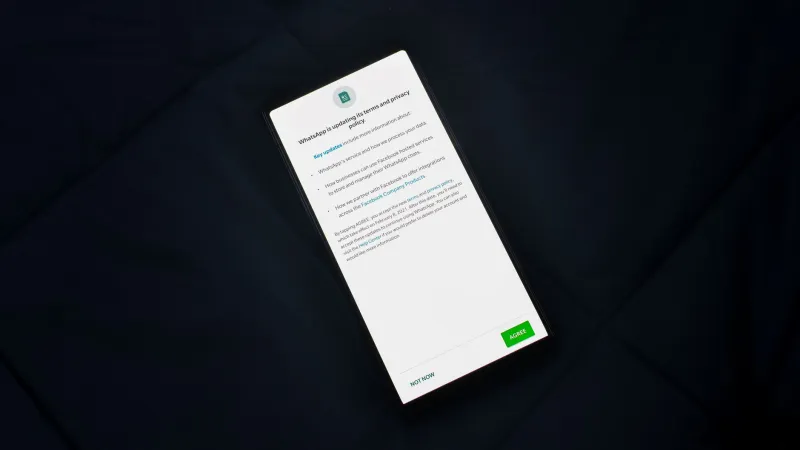
To be fair, the platforms aren't doing this in secret — technically. It's all in the privacy policy. Which is, of course, exactly the problem.
Airbnb's privacy policy runs thousands of words and references data sharing with "affiliates," "business partners," and "other third parties" in language vague enough to drive a truck through. Uber's policy explicitly states that it shares data with "analytics providers, advertising partners, and research partners," and its opt-out mechanisms require navigating multiple settings menus that reset periodically. Turo and similar peer-to-peer vehicle platforms have faced scrutiny for sharing driver behavior data with insurance partners — data that can affect your rates even outside the platform.
TaskRabbit, owned by IKEA since 2017, operates under a privacy framework that includes sharing with IKEA's broader corporate ecosystem. Fiverr and similar freelance platforms retain detailed records of your work history, client communications, and earnings that can be accessed by third parties under certain conditions.
None of this is illegal. Most of it is disclosed, somewhere, in language designed to be technically transparent while remaining practically impenetrable. The California Consumer Privacy Act (CCPA) has given California residents some additional rights around data deletion and opt-out, and federal legislation has been discussed for years — but meaningful national data privacy law in the US remains frustratingly absent.
The Trust Asymmetry Problem
What makes this particularly thorny in the sharing economy context is that these platforms explicitly trade on trust. They ask users to be vulnerable — to open their homes, share their vehicles, perform personal services — while simultaneously treating that vulnerability as a data extraction opportunity.
The peer-to-peer model was supposed to flatten hierarchies and return power to individuals. Instead, it's created a new kind of asymmetry: you know a lot about your fellow platform users (their ratings, their reviews, their verified ID), but the platform knows vastly more about all of you — and is monetizing that knowledge in ways you never agreed to in any meaningful sense.
There's also a compounding effect. The longer you use a platform, the more data it accumulates, and the more valuable — and potentially damaging — that profile becomes. A new user has a thin file. A five-year power host or longtime driver has an extraordinarily detailed behavioral record that paints an intimate portrait of their life.
What You Can Actually Do About It
The honest answer is: not as much as you should be able to. But there are steps worth taking.
Start by actually reading the data-sharing sections of privacy policies on platforms you use regularly. It's tedious, but knowing what you've agreed to is the baseline. Use CCPA rights if you're in California — you can request to know what data a company holds about you and ask for deletion. Several other states have passed similar laws, so check your state's consumer privacy rights.
Limit app permissions aggressively. Most sharing apps don't need continuous location access or contact list access to function. Revoke what you can in your phone's settings. Use a dedicated email address for platform sign-ups to limit cross-platform data aggregation.
For platforms where you have a choice, favor ones with explicit data minimization commitments and clear opt-out mechanisms. Smaller, community-based sharing networks — the kind we've written about before — often have dramatically simpler data practices simply because they lack the infrastructure for sophisticated harvesting.
And push back. Contact platforms directly to request data deletion. Leave reviews that mention privacy practices. Support organizations like the Electronic Frontier Foundation that are fighting for stronger federal data privacy legislation.
The sharing economy at its best is about people helping people. That vision is worth protecting — and it starts with demanding that the platforms facilitating those connections stop treating your life as inventory.