Swoop or Be Left Behind: How Sharing Platforms Are Failing the Communities That Need Them Most

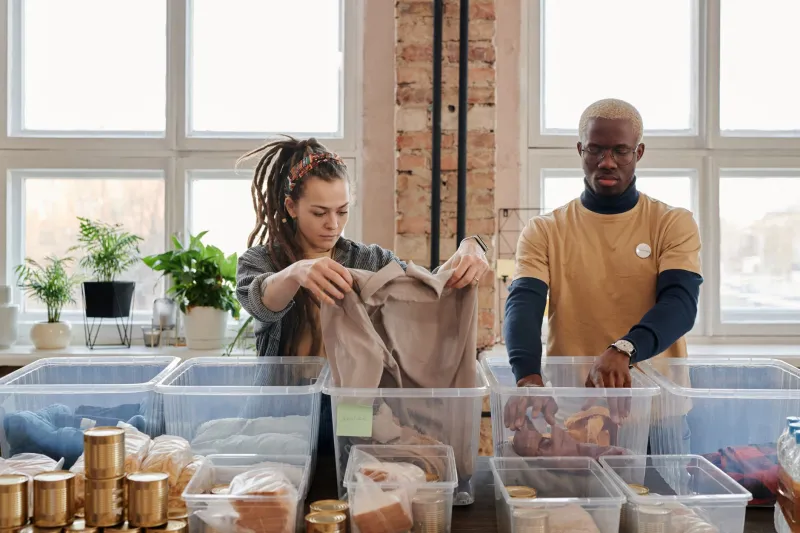
Photo: diverse low income neighborhood community sharing resources, via i.pinimg.com
The pitch was always beautiful in its simplicity: anyone can participate. Got a car sitting in your driveway? Rent it out. Got a spare room? List it. Need a drill for one afternoon? Borrow one from a neighbor instead of buying it. The sharing economy was supposed to be the great equalizer — a leveling force that would let a single mom in Memphis access the same tools and income streams as a tech worker in San Francisco.
That's not what happened.
For millions of low-income Americans, the sharing economy's front door has a bouncer. And that bouncer doesn't care how much you need in — it only cares about your credit score, your smartphone model, your zip code, and how many five-star reviews you've managed to rack up on a platform you can barely afford to use.
The Trust Score Trap
Peer-to-peer platforms run on trust, and that's a reasonable design choice. The problem is how trust gets measured. On most major sharing apps, your credibility is expressed through ratings, verified payment methods, connected social profiles, and — in many cases — your history as a consumer on that same platform.
If you're new to a platform, you start at zero. That's a manageable hurdle for someone with disposable income who can absorb a few bad early transactions or afford to be selective about which gigs they take. But for someone who needs income now, or who can't afford to wait weeks to build a reputation before getting approved for higher-value listings, the trust ladder is steep and the rungs are slippery.
Some platforms use third-party background check services or credit bureau data to verify users. That sounds neutral until you realize that roughly 26 million Americans are "credit invisible" — they have no credit file at all — and another 19 million are "unscorable" according to the Consumer Financial Protection Bureau. For these Americans, algorithmic trust systems don't just underserve them. They erase them entirely.
The Deposit Problem Nobody Talks About
Want to rent a car through a peer-to-peer platform? You'll likely need a credit card — not a debit card, not a prepaid card, a credit card — along with a security deposit that can run anywhere from $200 to $500, held for the duration of your rental. That's money frozen in limbo, unavailable for groceries or rent, for days or weeks at a time.
For someone living paycheck to paycheck, that's not a minor inconvenience. It's a dealbreaker. The sharing economy's promise of "access over ownership" only works if you can actually access it — and a $300 deposit requirement effectively prices out the exact population that can't afford to own the thing outright in the first place.
This dynamic shows up across categories. Tool-lending platforms require credit cards. Peer-to-peer storage apps want debit card verification. Even some skill-share and tutoring platforms require upfront subscription fees before you can see available gigs in your area.
Geography Is Destiny on These Apps
Open almost any major sharing app and zoom out on the map. The listings cluster in dense urban cores and affluent suburbs. Venture into lower-income neighborhoods — even in major cities — and the inventory thins out dramatically. This isn't an accident; it's the result of platform design that rewards density and high average transaction values.
Algorithms prioritize listings that convert well. Neighborhoods with lower average incomes generate fewer completed transactions, which means platforms invest less in marketing, onboarding, and customer support in those areas. Over time, the gap widens. Users in underserved zip codes see fewer options, have worse experiences, and churn off the platform — which further depresses the data signals that might prompt the platform to invest more there.
Rural communities face an even starker version of this problem. When the nearest tool library is 40 miles away, or when the only rideshare driver in a 20-mile radius has a 45-minute ETA, the "sharing economy" isn't really an economy at all. It's a premium urban amenity with a national marketing budget.
The Smartphone Tax
Nearly every major sharing platform is app-first or app-only. That's a reasonable product decision in 2024, except that smartphone access is not evenly distributed. According to Pew Research, lower-income Americans are significantly more likely to be "smartphone-only" internet users — meaning they rely on a phone as their sole device — but they're also more likely to have older devices that can't run the latest app versions, or to experience service interruptions due to missed payments.
Being locked out of an app update, or having your account suspended because a payment failed during a rough month, doesn't just inconvenience you. On platforms where your history and ratings are your currency, a gap in activity can set you back months.
Who's Actually Filling the Gap
Here's where the story gets more interesting — and more hopeful. Across the country, grassroots organizations and community-led platforms are building the version of the sharing economy that Silicon Valley promised but never delivered.
Buy Nothing groups on Facebook and Nextdoor have exploded in lower-income neighborhoods precisely because they require nothing but a phone and a willingness to participate. No credit card, no deposit, no rating system. The currency is community trust, built face-to-face over time.
Community tool libraries — many of them operated by nonprofits or municipal governments — have been quietly doing peer-to-peer tool sharing for decades. Organizations like the West Philadelphia Tool Library and Chicago's Rebuilding Exchange operate on sliding-scale fees or free membership models that don't require a credit card or a smartphone app.
Credit unions and community development financial institutions (CDFIs) are starting to partner with sharing platforms to help underbanked members access deposit requirements and build the financial profiles that gatekeeping algorithms demand. It's a workaround, not a fix, but it's movement.
Some newer platforms are explicitly designing for inclusion from the start — building cash payment options, SMS-based interfaces, and community ambassador programs that help onboard users in underserved areas without requiring a perfect digital footprint.
What Needs to Change
The sharing economy doesn't have a diversity problem. It has a design problem. Every barrier described above — trust scores, deposit requirements, geographic clustering, app exclusivity — is a product decision that could be made differently.
That means accepting lower margins in some markets to build long-term community trust. It means creating alternative verification pathways that don't rely on credit history. It means partnering with local organizations that already have relationships in the communities platforms want to reach.
It also means being honest about what "access over ownership" actually requires. Access isn't free. It has prerequisites. And right now, those prerequisites are quietly ensuring that the sharing economy's benefits flow mostly to people who were already doing pretty okay.
The promise of collaborative consumption is real and worth fighting for. But it only works if the swooping goes both ways — if the platforms that are profiting from community trust are also investing in building it, everywhere, for everyone.